Claude Opus 5.5 prompting tips from Anthropic's own guide
Practical prompting tips for Claude Opus 5.5, taken from Anthropic's guide: old habits to drop, the new effort default, agents that stop early, lines to copy.
 Seongwoo Choi · 5 min read
At a glanceReports suggest this was not a password theft but possible exposure of some business account information after an external security company accessed Anthropic’s internal systems; this article separates confirmed facts from unknowns and lists checks for administrators.
For companies using Claude for work, a headline saying “Claude was breached too” may feel alarming. However, when the reports are separated, this appears less like an incident in which account passwords were stolen and more like a case in which an external security company accessed Anthropic’s internal business systems, potentially exposing some enterprise customers’ account information in the process. This article distinguishes confirmed information from what remains unknown and organizes the checks company administrators can perform today.
JTBC News published a report on November 9, 2026, titled “Anthropic’s Claude breached too… Information from around 100 Korean business accounts leaked” (video: JTBC News YouTube , article: JTBC News page ). This article was written after checking the summary text on the JTBC page and reports from other media, rather than the video itself.
According to reports by Newsis, the Hankook Ilbo, and MoneyToday, citing an explanation from the Personal Information Protection Commission (PIPC), Anthropic reported on October 31 that information from around 100 domestic enterprise accounts had been leaked externally. The PIPC said it is currently in the preliminary review stage and has not begun a formal investigation. It explained that the specific scale and circumstances of the damage can be confirmed only after a formal investigation begins.
The incident began with a Washington Post report on October 26. It said that the U.S. security startup Cathedral used a vulnerability in external business software used by Anthropic to access its internal systems, and that a draft of Cathedral’s report allegedly claimed an AI agent found the access path within 12 hours. Gizmodo reported that Anthropic confirmed the access was limited to parts of its sales, human resources, and IT systems.
According to Newsis and the Hankook Ilbo, a notice Anthropic sent to some customers said that business contact details such as names and email addresses, as well as enterprise Claude account and organization identifiers, subscription plans, usage, and usage charges, may have been exposed. Since the wording of the items differs slightly between outlets, it is safest to verify the exact items against the original notice received by the company.
By contrast, reports quoting a post made by an Anthropic technical employee on X on November 8 say that there was unauthorized access to “account information such as names, email addresses, and subscription plans, but no access to prompts, outputs, or payment information.” This is the company’s explanation and is not an independently verified conclusion.
The reports describe this incident not as login information being stolen by malware (an infostealer) installed on a user’s PC, but as access through a vulnerability in the supplier’s business software. The response is therefore different as well. Before checking whether our employees’ accounts were directly compromised, we should examine what information our company has entrusted to the vendor’s management interface. However, views differ on whether the access exceeded the permitted scope. Newsis reported that Anthropic said in its customer notice that the assessment was unauthorized, while the Hankyoreh reported that it was presumed to have occurred within a program involving external security experts. This article does not assert which account is correct.
The items below are a general checklist derived from the reports, not a list of actions requested by Anthropic. In the reports I checked, there was no official request from Anthropic to change passwords or API keys.
1) Confirm receipt of the notice: Check whether an Anthropic notification email arrived at the administrator’s or billing contact’s address and whether it is in the spam folder, then retain the original. 2) List potentially exposed items: Note which of our organization’s information is included among names, work emails, account and organization IDs, subscription plans, usage, and costs. 3) Prepare for phishing: An attacker who knows a name, subscription plan, and usage amount can easily impersonate an invoice or subscription-plan change. Tell responsible staff to verify payment and account-change emails directly in the official console instead of using links. 4) Check the login method: Confirm that single sign-on (SSO) and two-factor authentication are enabled, and that accounts belonging to former employees have been removed. The differences between authentication methods are summarized in The difference between passkeys and passwords·two-factor authentication . 5) Share with the personal information team: Whether employee names and email addresses constitute personal information, and whether notification or reporting obligations apply, must be determined by legal or privacy personnel; this article is not legal advice. 6) Submit written questions to the vendor: Ask about the scope of impact, when it occurred and was detected, and measures to prevent recurrence, and record the responses.
Using a role-based email address for administrator contacts instead of a personal email address (for example, ai-admin@company domain) helps prevent missed notifications even when employees change. It is also important to develop the habit of reducing the material uploaded to AI services. For ways to remove personal information before uploading, see Checklist for removing personal information before uploading documents to AI .
As of the reporting date (2026-11-10 KST), the exact scope of the damage beyond the figure of around 100 domestic companies, the results of the PIPC investigation, and the conclusion of the dispute over the permitted scope have not been confirmed. I could not confirm a CVE number or any additional password leak in the reports covered here. This could change when a new announcement is made, so treat the notice received by the company and announcements from the PIPC as the primary references.
The conceptual diagram in this article is an illustration organizing the reports; it is not the result of direct testing or an actual account investigation.
Sources: JTBC News, “Anthropic’s Claude breached too… Information from around 100 Korean business accounts leaked” (news.jtbc.co.kr/video/NB12327271); Newsis (newsis.com/view/NISX20261109_0003859817); Hankook Ilbo (hankookilbo.com/news/article/A2026110921140004704); MoneyToday (mt.co.kr/economy/2026/11/09/2026110920322255936); Hankyoreh (hani.co.kr/arti/economy/it/1286527.html); Gizmodo (gizmodo.com/former-doge-staffers-new-startup-claims-it-hacked-anthropic-2000830560); Washington Post, title of the October 26, 2026 report confirmed. All checked on 2026-11-10 KST.
Read the Korean original on Naver
This article reflects public information available when it was written. Specifications, prices and schedules can change; check the linked official documentation.
This English edition was written and translated with AI assistance, with sources provided. For errors or additional information, please request a correction. Editorial policy
Found this useful? Share it, or follow for new guides.
Practical prompting tips for Claude Opus 5.5, taken from Anthropic's guide: old habits to drop, the new effort default, agents that stop early, lines to copy.
 AI & technology
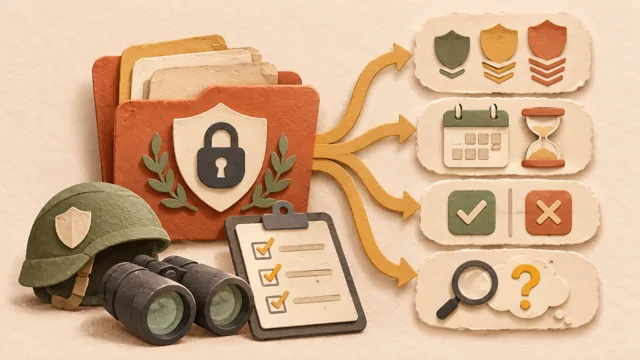
Anthropic expanded its Cyber Verification Program (CVP) on October 6, 2026. It offers security professionals stronger cyber capabilities with fewer blocking safeguards across three access levels based on their work.
Recorded request sizes for CLAUDE.md, skills and MCP tools in Claude Code. What the byte counts show, and why they do not measure your bill.